
In today’s fast-paced world, smartphones have become indispensable. We rely on them for everything—communication, productivity, entertainment, and even health tracking. However, as smartphones become increasingly advanced, one trend has emerged that has frustrated consumers and repair advocates alike: modern phones are intentionally designed to be harder—and costlier—to repair.
The Shift Toward “Planned Obsolescence”
The term planned obsolescence refers to the practice of designing products with a limited lifespan, encouraging frequent replacements. This strategy has been widely adopted by smartphone manufacturers. Instead of encouraging longevity through repairability, devices are now made with tightly integrated components and fragile designs, making repair either impractical or prohibitively expensive. For companies, this drives higher sales and frequent upgrades, but for consumers, it leads to higher costs and unnecessary waste.
Non-Removable Batteries
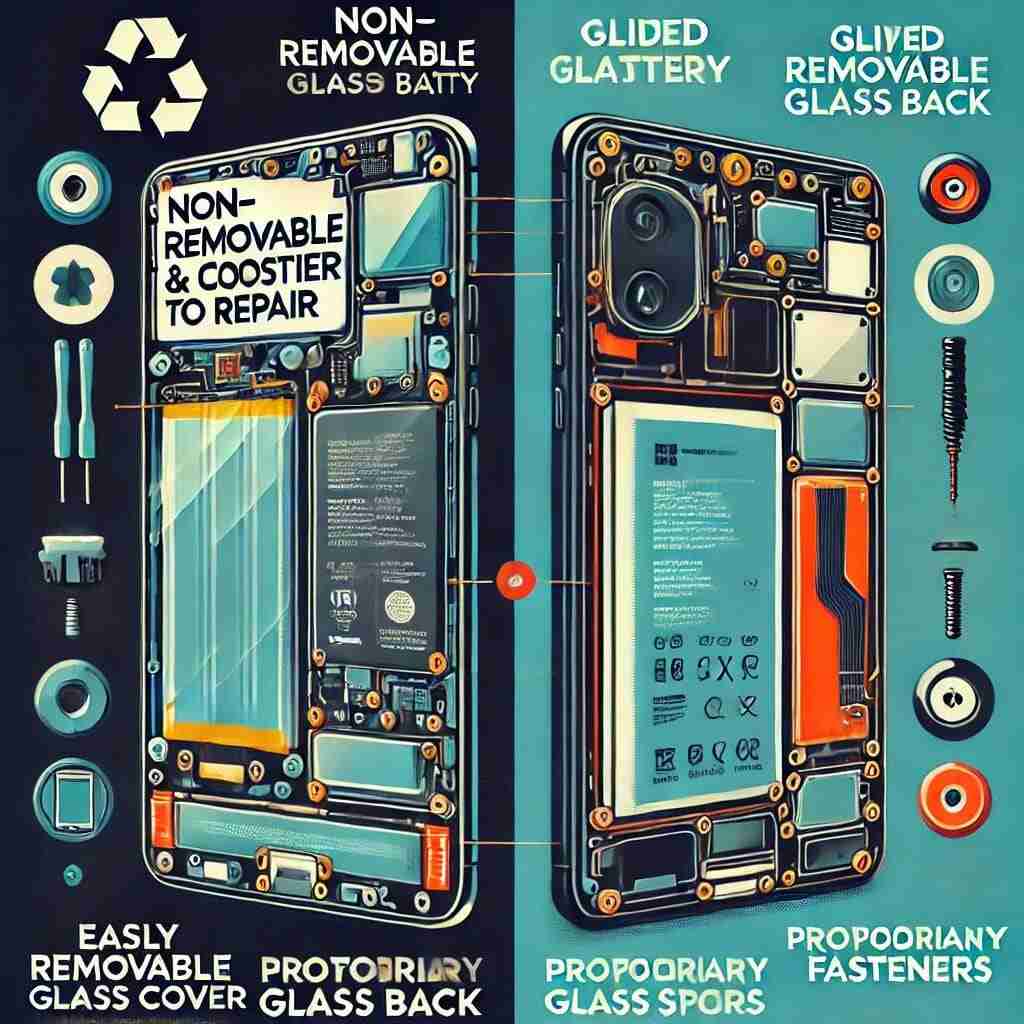
One of the most notable changes in phone design is the shift away from removable batteries. In earlier generations of phones, swapping out a battery was as simple as removing the back cover. Today, most smartphones have sealed enclosures, requiring specialized tools and skills to access the battery. Manufacturers argue that sealed designs enable thinner, sleeker devices with better water resistance, but this design choice makes it significantly harder for consumers to replace batteries—often the first component to degrade over time. Instead of replacing a $30 battery, users are often left with no choice but to purchase an entirely new device.
Glue, Not Screws
Modern phones rely heavily on adhesives rather than screws to hold components in place. For example, screens, batteries, and other internals are often glued together. This design choice reduces manufacturing complexity and allows for slimmer devices but makes repairs far more difficult. Removing a glued-in battery or screen can be time-consuming and risky, as excessive force can damage delicate components.
Proprietary Tools and Parts
Another significant barrier to repairability is the use of proprietary tools and parts. Many phone manufacturers design their devices to require specialized tools for disassembly, which are not readily available to the average consumer. Moreover, components such as screens, cameras, and fingerprint sensors are often paired with the phone’s software, meaning that using third-party replacement parts can render the phone unusable or trigger warnings. Apple, for example, has faced criticism for its use of proprietary screws and software locks that make independent repairs exceedingly difficult.
The Cost of Repairs
With repairability intentionally restricted, the cost of repairing a modern smartphone has skyrocketed. Official repair services often charge hundreds of dollars for basic repairs, such as screen replacements or battery swaps. Independent repair shops may offer lower prices, but they often face hurdles like limited access to parts, tools, and repair manuals. This lack of options pushes consumers toward simply replacing their phones—a much costlier solution.
To illustrate the disparity, consider the cost of repairing a cracked screen. For flagship devices like Apple’s iPhone or Samsung’s Galaxy series, a screen replacement can cost anywhere between $200 and $400 through official repair channels. In some cases, this represents 30-50% of the phone’s original cost, making repair financially unappealing.
Environmental and Ethical Concerns
The push toward difficult repairs doesn’t just hurt consumers’ wallets—it also has significant environmental consequences. E-waste is a growing global crisis, with millions of discarded phones ending up in landfills each year. These devices contain toxic materials, such as lithium, lead, and cadmium, which can harm ecosystems and human health if not disposed of properly. Furthermore, manufacturing new phones requires raw materials like rare earth metals, which are finite resources and involve energy-intensive extraction processes.
Promoting repairable designs would not only save consumers money but also reduce e-waste and the environmental footprint of smartphone production.
The Right-to-Repair Movement
In response to these challenges, the right-to-repair movement has gained momentum. Advocates are pushing for legislation that would require manufacturers to make repair manuals, tools, and parts available to consumers and independent repair shops. Laws have already been passed in some regions, such as the European Union, which mandate improved repairability and transparency in electronic devices.
In the United States, several states have introduced right-to-repair laws, with growing public support. For example, New York passed a right-to-repair law in 2022, a significant step toward empowering consumers to extend the life of their devices.
A Call for Change
The current trend of designing smartphones to be harder and costlier to repair benefits manufacturers at the expense of consumers and the environment. While innovations in design and technology are important, they shouldn’t come at the cost of repairability. Consumers should demand more sustainable and repair-friendly devices.
Manufacturers, in turn, must prioritize designs that strike a balance between durability, innovation, and repairability. Smartphones are integral to modern life, and it’s time we rethink how they’re built—not just for the convenience of today, but for the sustainability of tomorrow.
Conclusion
Modern smartphones are marvels of technology, but their increasingly repair-hostile designs are creating unnecessary financial and environmental burdens. By supporting the right-to-repair movement, demanding more sustainable products, and choosing devices with better repairability, consumers can drive change. It’s time to challenge the status quo and advocate for a future where technology works for us—not against us.



0 Comments